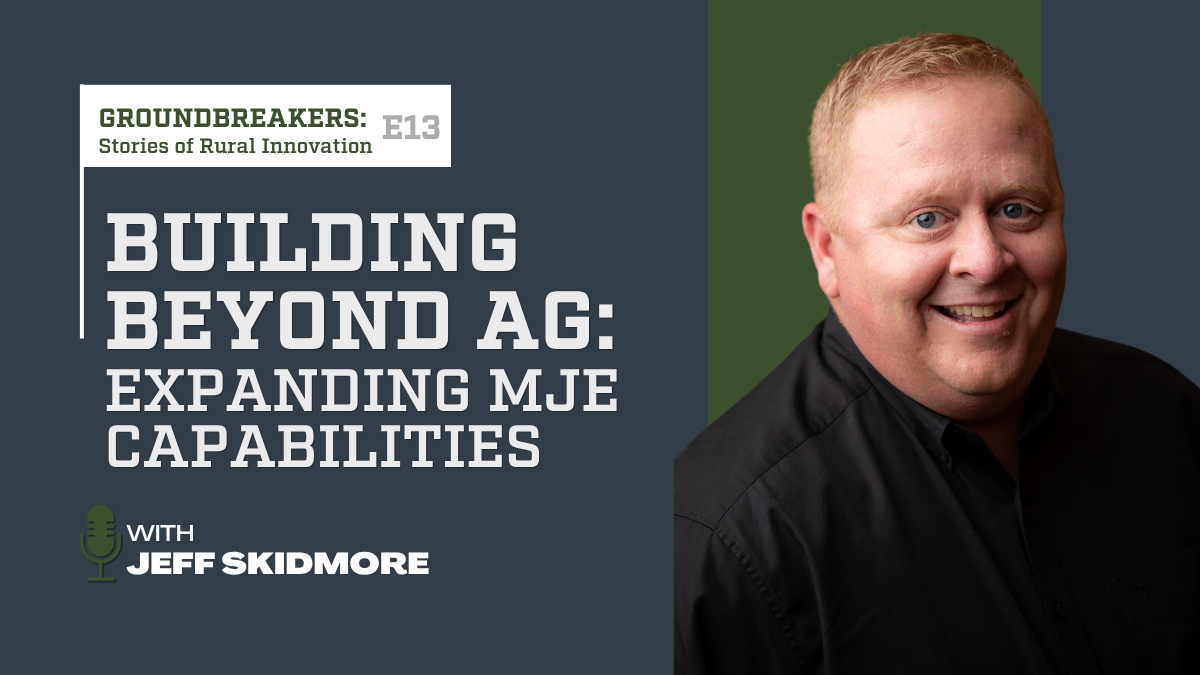
MJE Project Manager Jeff Skidmore shares how highway, wastewater and landfill construction have become an important part of MJE’s work across Kansas.
When most people hear the name MJE, they think agriculture.
Feedyards. Dairies. Earthwork. Decades of construction across cattle country.
That reputation is well-earned, but it doesn’t tell the whole story.
For nearly 19 years, MJE Project Manager Jeff Skidmore has worked across a much broader range of projects. Along with agricultural facilities, his experience includes highways, municipal landfills, wastewater treatment facilities, airports and other civil construction projects.
In Episode 13 of Groundbreakers: Stories of Rural Innovation, Jeff joins host Ethan Cantrell to pull back the curtain on a side of MJE many people never see.
As Jeff puts it:
“You hear the MJE name out there and everybody thinks, ‘You guys just move dirt, don’t you?’ We’re a lot more than that.”
And that “more” has become an increasingly important part of how MJE serves both agriculture and rural communities.
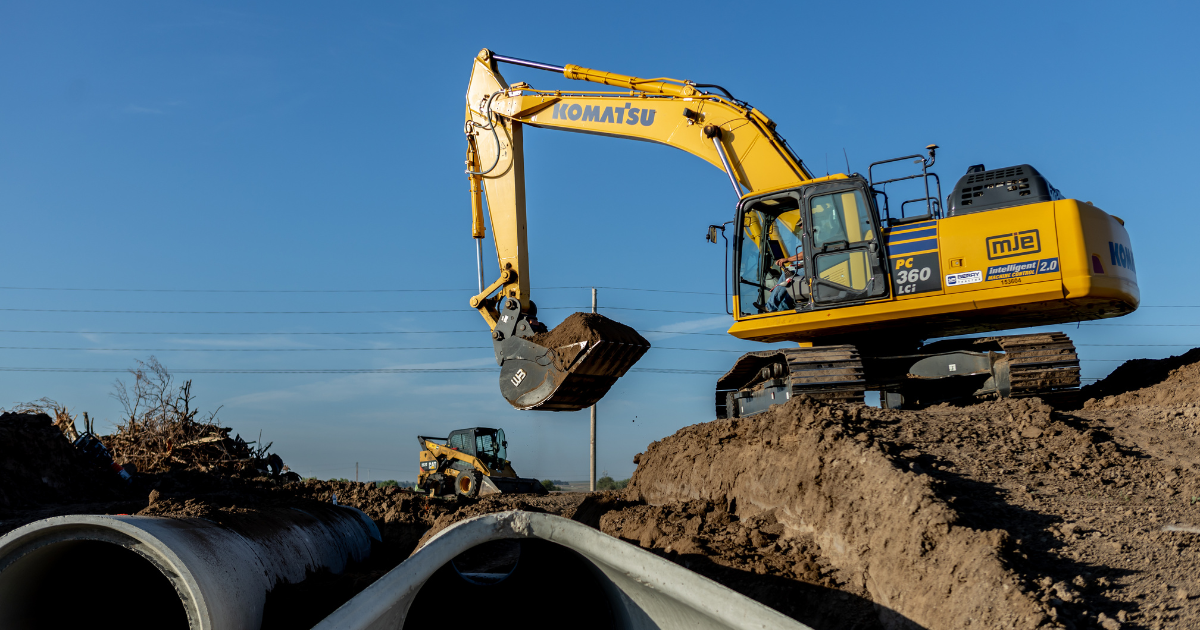
The Work Beneath the Highway
Drive across a completed highway and the pavement is what you see.
A major portion of the work required before that pavement can go down, however, happens below it.
On many highway projects, MJE works as a subcontractor responsible for earthwork and grading along with culverts, drainage structures and select concrete structures. The goal is to prepare the site so the general contractor can move forward with stabilization, asphalt or concrete paving and the remaining phases of construction.
That work requires more than moving material from one place to another.
Crews have to work to engineered specifications, coordinate with other contractors and maintain schedules that can carry significant financial consequences if deadlines aren’t met.
For a project manager like Jeff, that means constantly balancing crews, budgets, schedules, inspections and changing field conditions.
“You have to be flexible,” he says.
Plans change. Conditions change. New challenges surface. Successful project management means being willing to listen to the people in the field, work with the broader project team and make decisions as conditions evolve.
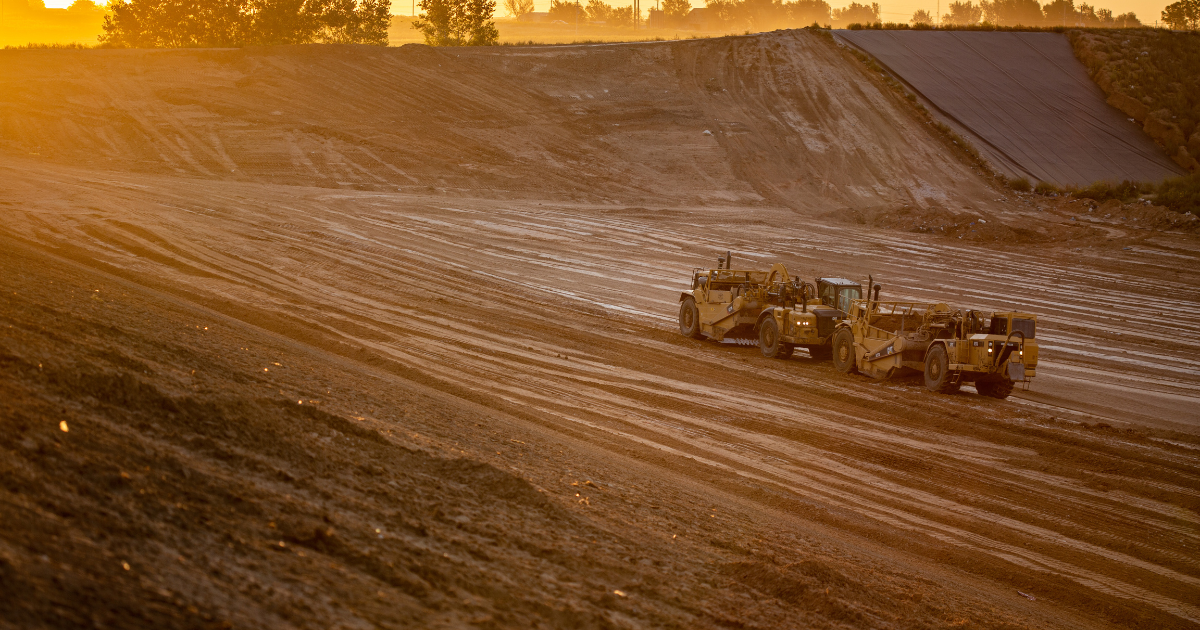
A Landfill Is Much More Than a Hole in the Ground
Landfills are another example of infrastructure most people use without seeing what goes into building it.
At first glance, the job may appear straightforward: excavate a large area and create space for waste.
The reality is far more technical.
Modern landfill cells can incorporate engineered liner systems, leachate collection piping, drainage rock, pump systems, precise surveying and extensive inspection throughout construction.
Once the bulk earthwork is complete, coordination becomes especially important.
Specialty subcontractors may install liner systems. Pipe and drainage systems have to be positioned correctly. Elevations must maintain proper drainage. Inspectors monitor the work throughout the process.
“The moving dirt part is the easy part,” Jeff explains.
Everything that follows requires careful sequencing between crews, subcontractors, engineers and inspectors.
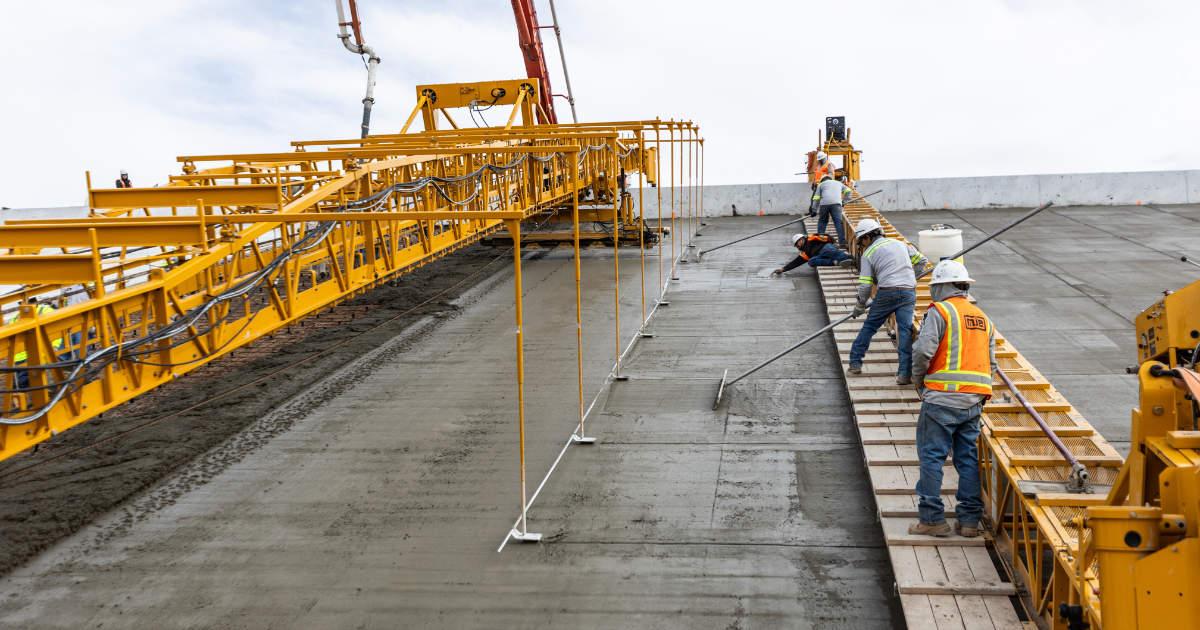
Wastewater Infrastructure Adds Another Level of Complexity
Municipal wastewater facilities bring their own set of challenges.
While MJE has extensive experience with water management on feedyards and dairies, municipal wastewater projects operate under different environmental requirements and often involve municipalities, engineers, public entities and multiple contractors.
Facilities can vary significantly in size and construction.
Jeff has worked on projects ranging from smaller municipal systems to large wastewater facilities involving significant earthwork, piping, concrete paving and lined containment areas.
Increasingly, these projects also intersect with another growing area of infrastructure: biogas.
As communities and agricultural operations look for better ways to manage waste streams, recover resources and improve environmental performance, wastewater and biogas projects are becoming increasingly sophisticated.
The equipment may be different and the specifications may change, but the foundation of MJE’s approach remains familiar: understand the project, coordinate the work and build it correctly.
Agriculture and Civil Infrastructure Aren’t Separate Worlds
One of the most important points Jeff makes during the conversation is that agricultural construction and civil construction aren’t as disconnected as they may appear.
A feedyard depends on roads.
Cattle trucks, feed trucks, employees and suppliers all depend on transportation infrastructure.
Growing rural communities need wastewater systems. They need landfills. They need roads capable of supporting the industries and people that operate there.
On the agricultural side, MJE may be building infrastructure that helps feed the world.
On the civil side, the company is helping build the infrastructure that allows those agricultural businesses and their communities to function.
“They really work hand-in-hand,” Jeff says.
That connection is one reason civil construction has become an important part of MJE’s diversified business.
Diversification Keeps the Wheels Turning
Agriculture has cycles. So does construction.
Demand changes from year to year, which makes diversification more than a growth strategy. It helps create stability.
Jeff sees continued opportunity for MJE in highway construction, wastewater facilities, landfills and other civil projects.
Each successful project builds experience. It expands MJE’s portfolio. It strengthens relationships with contractors, engineers, municipalities and other partners. And it creates opportunities for the next project.
That’s important for a company with hundreds of employees depending on a steady pipeline of quality work.
Civil construction, Jeff says, “is part of what we are now.”
Nearly Two Decades of Building More Than Projects
Jeff joined MJE in June 2007 expecting to focus primarily on trucking.
A few months later, a conversation with CEO Aaron Jantz changed the direction of his career. Jeff moved into project management and has been doing it ever since.
Nearly 19 years later, he describes himself as something of a “Swiss Army knife,” with experience ranging from feedyards and dairies to airports, highways, landfills and wastewater facilities.
What has kept him at MJE for that long?
Part of the answer is simple: he enjoys the work.
But Jeff also points to the culture of the company, relationships with coworkers and opportunities employees have to grow into new positions and greater responsibility.
Promoting people who already understand MJE’s expectations helps preserve that culture as the company grows.
Employees know the standards. They understand the teams. They know what it takes to deliver a project the MJE way.
For Jeff, that creates something bigger than a job.
It creates ownership in the finished product.
Taking Pride in What Gets Built
Construction rarely looks impressive halfway through.
A project may be muddy, busy, stressful and filled with challenges that most people will never see once the work is complete.
Then the final pieces come together.
A road opens. A wastewater facility begins operating. A landfill cell is ready to serve a community. A feedyard begins moving cattle through a new facility.
That’s when Jeff says you can finally stand back and see what the team accomplished.
“I take a lot of pride in what I do,” he says.
After nearly two decades, that pride remains one of the clearest threads running through his work.
And whether MJE is building for agriculture or building the infrastructure surrounding it, the mission isn’t simply to move dirt.
It’s to build something that works, lasts and serves the people who depend on it.
Hear the full conversation with Jeff Skidmore on Groundbreakers: Stories of Rural Innovation.
Watch the full episode on YouTube or listen wherever you get your podcasts.
About Groundbreakers
Groundbreakers: Stories of Rural Innovation takes listeners into the heart of agriculture, construction, livestock equipment and rural business. Hosted by Ethan Cantrell, Dealer Relations Manager at MJE Livestock Equipment, the series features conversations with the people helping move rural America forward.